
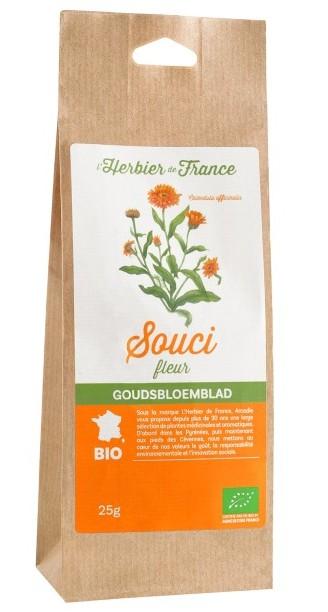
Marigold FLOWER -25g-Herbarium of France
Remaining stock : 10
 24/48h shipping
 Home delivery or delivery to relay points from €4.30, free from €60
 100% compensated Green delivery
Organic Marigold Flower for Herbal Tea and External Use
Are you looking for a multi-purpose organic plant with anti-inflammatory, healing, and spasmolytic properties, used both as an infusion for digestive comfort and as an external skin treatment, available as high-quality dried flowers? Organic Marigold Flowers (Calendula officinalis) from L'Herbier de France are among the most versatile European medicinal plants. Rich in flavonoids (isorhamnetin, narcissin), triterpenes (oleanolic acid, ursolic acid), carotenoids (lutein, zeaxanthin), and phenolic acids, they are recognized in traditional use for their anti-inflammatory action on the digestive mucosa and their healing power on the skin. 25g of dried organic flowers. L'Herbier de France.
The benefits of organic marigold flowers
- Anti-inflammatory for digestive mucosa: Calendula's triterpenes and flavonoids reduce inflammation of the gastric and intestinal mucosa. A well-established traditional use for gastritis, ulcers, and inflammation of the digestive tract.
- Healing and skin regenerating: In external application (oil macerate, infusion compress), calendula accelerates the healing of minor wounds, irritations, and mild burns. It is one of the most widely used healing plants in natural cosmetics.
- Digestive spasmolytic: Calms intestinal spasms, cramps, and colic, particularly when combined with chamomile.
- Antioxidant carotenoids: Lutein, zeaxanthin, and beta-carotene provide natural antioxidant protection.
- Certified Organic Agriculture: Pesticide-free. L'Herbier de France, specialist in European medicinal plants.
Active ingredients and their traditional role
Triterpenes (oleanolic and ursolic acids)
Calendula's triterpenes are its primary anti-inflammatory active ingredients. They inhibit pro-inflammatory enzymes (COX-2, LOX) and reduce the production of inflammatory cytokines. Their action is documented on digestive and cutaneous mucosa. They contribute to healing by stimulating fibroblast proliferation and collagen synthesis.
Flavonoids (isorhamnetin, narcissin, quercetin)
Marigold flavonoids possess antioxidant, anti-inflammatory, and spasmolytic properties. They relax intestinal smooth muscles, explaining the plant's spasmolytic action on digestive pain and cramps. They potentiate the action of triterpenes in synergy.
Carotenoids (lutein, zeaxanthin, beta-carotene)
Carotenoids give calendula its orange color and contribute to its antioxidant protection. They nourish and protect the skin in external application, which explains the use of calendula oil macerate in care products for babies and sensitive skin.
Mucilaginous polysaccharides
Calendula polysaccharides form a protective film on irritated mucosa (gastric, intestinal, oral), isolating them from irritants and facilitating healing.
Who is this herbal tea for?
- People suffering from gastritis, reflux, or inflammation of the gastric mucosa seeking natural support
- People suffering from intestinal spasms and cramps looking for a gentle spasmolytic plant
- People looking for a natural healing treatment for external use (infusion compresses on wounds, irritations)
- People seeking a gentle, well-tolerated daily anti-inflammatory herbal tea
Composition
| Plant | Part used | Origin | Certification |
|---|---|---|---|
| Marigold (Calendula officinalis) | Dried flowers | Europe | Organic Agriculture |
25g. 100% organic marigold flowers. No additives or preservatives. Traditional use. Does not replace medical treatment.
How to prepare this herbal tea?
Pour 1 to 2 teaspoons of dried flowers (2 to 3g) into a cup. Cover with boiling water (200ml). Let steep for 8 to 10 minutes covered. Filter. Drink 2 to 3 cups per day, preferably between meals. For external use (healing compress), prepare a concentrated infusion (5g for 200ml), let it cool, and apply with a clean cloth to the affected area.
Precautions
- Not recommended for people allergic to Asteraceae (chamomile, arnica, dandelion): risk of cross-reactions
- Not recommended for pregnant women: possible emmenagogue properties at high doses
- In case of severe gastric ulcer or diagnosed digestive pathology, consult a doctor
- Keep out of reach of children
FAQ
Are marigold and calendula the same plant?
Yes, marigold (common name) is Calendula officinalis (botanical name). Both names refer to the same plant. In phytotherapy, marigold flowers and calendula flowers are identical. Do not confuse with marsh marigold (Caltha palustris), which is a different, toxic plant.
Can marigold infusion be used on a baby's skin irritations?
Yes, calendula is one of the most widely used plants in natural pediatrics for infant skin irritations. A cooled and filtered infusion can be applied gently as a compress on redness and irritations. Avoid contact with eyes.
Can marigold be combined with chamomile in an infusion?
Yes, it is one of the classic combinations in digestive phytotherapy. Marigold (mucosa anti-inflammatory) + chamomile (spasmolytic, soothing) form an ideal duo for overall digestive comfort. Both belong to the Asteraceae family: avoid this blend in case of allergy to this family.
The anti-inflammatory and healing medicinal flower of European phytotherapy, for internal and external use
Organic marigold flowers (Calendula officinalis), rich in triterpenes, flavonoids, and carotenoids. L'Herbier de France for quality organic medicinal plants.
Discover the Herbier de France range
Read our article: These natural active ingredients that gently soothe inflammation
Order on pleine-forme.net
We clean up after ourselves.
Ecommerce deliveries have a carbon footprint. That's why we support verified projects that remove carbon from the air.


Every delivery’s carbon footprint is calculated based on weight, shipping method, and distance traveled. We neutralize these emissions by purchasing verified carbon removal credits from groundbreaking projects.


With your purchase, you’ll join a community of proactive merchants and customers dedicated to a sustainable future. Together, we've removed emissions for over 87 million deliveries and removed over 60 thousand tonnes of carbon.
We work with a network of pioneering carbon removal companies that have been vetted by the commerce platform Shopify.

