
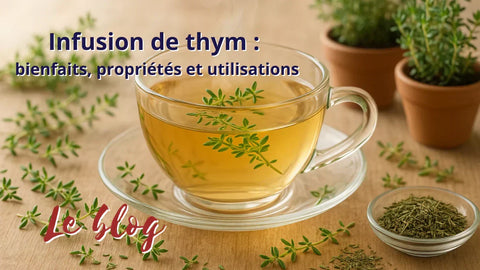
Thyme infusion: benefits, properties and uses
Introduction
Thyme, this modest aromatic plant iconic to the Mediterranean basin, is much more than just a culinary condiment. Its leaves conceal a wealth of medicinal virtues, making its infusion a valuable ally for your daily health. From stimulating immunity to soothing the respiratory tract, as well as its beneficial effects on digestion and stress reduction, thyme tea offers a varied spectrum of uses.
This article aims to demystify the benefits and properties of this medicinal plant, guide you in preparing the perfect recipe, and enlighten you on usage precautions.
What is thyme: origin and varieties.

Thyme (Thymus vulgaris), a member of the Lamiaceae family, is a small perennial shrub that thrives in the dry, sunny soils of the Mediterranean region. Its tiny oval leaves and delicate flowers, often pink or white, give off a unique fragrance that is both fresh and slightly camphorated. This fragrance reflects its richness in active ingredients, including the famous thymol.
There are nearly 300 varieties of thyme, each possessing specific aromatic nuances and concentrations of compounds:
- Common thyme, for its robust taste.
- Lemon thyme (Thymus citriodorus), with its refreshing citrus note.
- Wild thyme (Thymus serpyllum), a creeping variety.
- Linalool thyme and carvacrol thyme, valued in phytotherapy for their targeted properties.
The health benefits of thyme infusion.
Thyme infusion stands out as a staple of herbalism thanks to its remarkable properties. Rich in antioxidants, vitamins, and minerals, this herbal tea provides genuine support for the body. Consuming it regularly can contribute to general well-being and help prevent various ailments.
Thyme infusion for digestion
Thyme is an excellent ally for the digestive system:
Its antispasmodic properties, attributed to thymol and flavonoids, relax the muscles of the gastrointestinal tract, relieving abdominal cramps, bloating, and flatulence.
- It stimulates the production of digestive juices, promoting better breakdown of food and optimal nutrient assimilation.
- Its carminative property prevents the excessive formation of gas, offering intestinal comfort and a feeling of lightness after meals.
Thyme infusion for coughs and respiratory tracts

Thyme infusion is recognized for its benefits on the respiratory tract, especially in cases of cough, cold, or bronchitis:
- Its active compounds (thymol, carvacrol) act as natural expectorants, facilitating the expulsion of mucus and clearing the bronchi.
- Its anti-inflammatory properties soothe irritation of the throat and respiratory mucous membranes.
Clinical studies show effectiveness comparable to certain bronchial thinning agents for productive coughs and a significant reduction in cough intensity in 93.5% of children after 7 to 14 days.
Thyme infusion for the immune system
Thyme supports immunity:
- Rich in antioxidants (flavonoids), it fights oxidative stress, which is responsible for cellular aging and chronic diseases.
- Contains vitamins C and A and essential minerals, strengthening natural defenses.
Regular consumption helps prevent infections, especially in winter.

Thyme infusion to reduce stress and anxiety
Thyme tea has soothing properties:
- Carvacrol, a phenolic compound, offers anxiolytic effects, reducing stress and anxiety.
- A cup at the end of the day promotes relaxation and prepares you for a more restful sleep, without acting as a direct sedative.
How to prepare the perfect thyme infusion.
Preparing a thyme infusion is a simple act that allows you to fully enjoy all its virtues. The quality of the ingredients and respecting the infusion time are essential for extracting all the active ingredients.
Choosing your thyme: fresh or dried?
Fresh thyme, ideally picked in full bloom, offers an intense flavor and a high concentration of essential oils and vitamins.
Dried thyme, whether loose or in a bag, is practical and available all year round, and retains its medicinal properties well.
To dry your thyme, hang the branches in a dry, ventilated place for about two weeks, then store in an airtight jar away from light.
Basic recipe for thyme infusion
Ingredients:
- 1 to 2 teaspoons of dried thyme (or double for fresh thyme branches) per 250 ml of water.
Preparation:
- Boil water to 90°-100°C.
- Add the thyme to a cup or teapot.
- Pour the boiling water over the thyme.
- Let it infuse for 10 to 15 minutes covered to preserve the essential oils.
- Strain and enjoy warm.

When to drink your infusion?
3 to 4 times a day for coughs or colds, after meals for digestion, or in the evening for relaxation.

Tips to improve taste and benefits
- Add a spoonful of thyme honey to soften the taste and reinforce the antiseptic action (useful for sore throats).
- Incorporate a few drops of lemon juice for freshness and a vitamin boost.
Combine with other plants:
- Ginger for the respiratory tract and digestion.
- Chamomile or lemon balm for an increased soothing effect.

Other uses of thyme for health and well-being.
Thyme offers varied uses beyond infusion, in cooking or aromatherapy, thanks to its versatile properties.
Thyme in cooking: an aromatic ally
A staple of Mediterranean cuisine, it flavors meats, fish, vegetables, and sauces.

Rich in antioxidants, iron, vitamins C and K, and calcium, it stimulates the appetite and facilitates digestion.
Anecdote: The Romans used it to purify their homes and instill courage, hence its Latin name, Thymus, meaning "courage" or "fragrant smoke." This legacy bears witness to the importance of this aromatic plant throughout history, well beyond its culinary role.
Thyme essential oil: properties and precautions
-
A powerful antiseptic, antibacterial, and antifungal agent thanks to thymol and carvacrol.
Uses:
- In a diffuser to purify the air.
- In inhalation to clear the respiratory tract.
- Diluted in a vegetable oil for massages.
Precautions and contraindications of thyme infusion
Like any medicinal plant, thyme infusion requires precautions for safe use.
Who should be cautious?
- Pregnant and breastfeeding women: limit to culinary use or consult a doctor.
- Young children and infants: avoid.
- People with hypertension or on anticoagulants: consult a professional due to a mild hypertensive effect and vitamin K content.
- People allergic to Lamiaceae (mint, sage, rosemary): risk of hypersensitivity.

Possible side effects
- Rare and mild: nausea, heartburn, abdominal pain.
- Very rare: cutaneous allergic reactions, especially in people sensitive to celery or birch pollen.
In case of unusual symptoms, stop consumption and consult a doctor.
Myths and realities of thyme infusion.
- Myth: Immediate and miraculous effect.
Reality: Its benefits are progressive and work in synergy with the body.
- Myth: Contains gluten.
Reality: Thyme is naturally gluten-free.
- Myth: Remedy for dry or mature skin.
Reality: Its antioxidants protect cells, but do not replace moisturizing skincare.
F.A.Q
Q: Can thyme be consumed every day?
A: Yes, for preventive or comfort use, 1 to 2 cups per day are generally safe. For intensive therapeutic use (3-4 cups/day), it is recommended not to exceed 3 weeks of continuous treatment and to take a break.
Q: Is thyme infusion good for cholesterol?
A: Some studies suggest thyme has the potential to help maintain healthy cholesterol levels due to its phytochemical compounds, which might reduce bad cholesterol (LDL). However, it does not replace medical treatment, and professional advice is essential.
Q: Is thyme good for the heart?
A: Thyme contains compounds that stimulate the adrenal glands, contributing to increasing the body's resistance, which can have a general tonic effect, including on the heart. But it is not a remedy for heart disease.
Marie's expert tips
As a dietitian, I advise you to integrate thyme into your daily life as a regular wellness practice, by varying its uses. For the herbal tea, choose organic dried thyme or thyme grown without pesticides for optimal purity. Don't hesitate to combine it with rosemary for its benefits on the liver and vitality, or with peppermint to strengthen the digestive action. If you combine several food supplements, even natural ones, consult a specialist to avoid any overdose or undesirable interaction.
Balance is the key to lasting health.
Thyme is a formidable natural resource, whose virtues have been recognized for centuries. Its antioxidant, antiseptic, antibacterial, and soothing properties make it a valuable asset for supporting your immune system, improving your digestion, and soothing your respiratory tract. Whether in an infusion, in cooking, or as an essential oil (used with caution), thyme offers multiple ways to take care of yourself.
Do not hesitate to integrate it into your routine to fully enjoy its benefits. Share your own experiences and recipes in the comments, as each piece of feedback enriches our collective knowledge of this wonderful medicinal plant.


Comments (0)
There are no comments for this article. Be the first one to leave a message!