
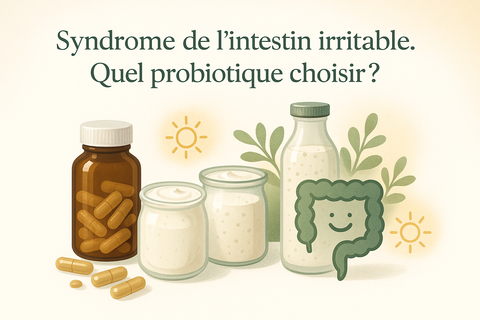
Irritable Bowel Syndrome: Which probiotic to choose?
By Marie, dietitian and advisor specialized in food supplements at Pleine Forme
Over 15 years of experience in personalized wellness coaching
If you suffer from daily abdominal pain, bloating that prevents you from enjoying a restaurant meal, or an unpredictable cycle of alternating constipation and diarrhea that dictates your schedule, you are not alone. Irritable Bowel Syndrome affects millions of people and can truly impact quality of life. Faced with these discomforts, many look for natural and effective solutions. Probiotics are frequently mentioned, but choosing and using them requires an informed approach that I will share with you today.
🔍 Do you recognize these 5 signs of IBS?
Before we go any further, take this quick self-test:
- Abdominal pain relieved after going to the toilet?
- Regular bloating, especially at the end of the day?
- Disturbed transit: constipation, diarrhea, or an alternation of both?
- Recurring symptoms for at least 3 months?
- Normal medical tests: no inflammation or lesions detected?
If you check 3 or more criteria, you likely suffer from IBS. This guide is for you.
Understanding Irritable Bowel Syndrome (IBS)

Irritable Bowel Syndrome (IBS), also known as functional colopathy, is a chronic digestive disorder characterized by recurring abdominal pain, bloating, and changes in bowel habits. These symptoms occur without any identifiable organic lesions during medical examinations, making it a "functional" diagnosis according to Rome IV criteria.
Dysbiosis: when your intestinal garden is invaded
Imagine your gut as a garden. In a healthy gut, billions of "good plants" (beneficial bacteria such as lactobacilli and bifidobacteria) coexist in balance. In IBS, this garden is unbalanced: the good plants gradually disappear, giving way to "weeds" - less beneficial bacteria that proliferate.
This imbalance, called dysbiosis, affects two-thirds of IBS patients. It directly influences:
- Intestinal motility (transit speed)
- Visceral sensitivity (perception of pain)
- Low-grade inflammation of the intestinal wall
- Digestion of certain foods, notably FODMAPs (fermentable carbohydrates)
This dysbiosis is not inevitable. This is where probiotics come in to "replant" your intestinal garden.
Can probiotics really relieve my IBS?

Probiotics are living microorganisms that, when administered in adequate amounts, confer a health benefit. In the context of IBS, their action is multifaceted and scientifically proven.
How do they work in practice?
- Microbiota rebalancing: they reseed the gut with beneficial bacteria
- Strengthening the intestinal barrier: they seal a "leaky" intestinal wall
- Production of beneficial substances: notably short-chain fatty acids that nourish intestinal cells
- Immune modulation: they calm local inflammation
- Action on the gut-brain axis: they influence communication between your gut and your brain
What does science say?
Numerous randomized clinical trials have demonstrated the efficacy of certain probiotic strains in:
- Reducing abdominal pain by 30 to 50%
- Significantly decreasing bloating
- Improving bowel regularity
- Increasing overall quality of life
💡 Remember: Not all probiotics are created equal. Efficacy depends entirely on the specific strain used. A "generic" probiotic without a specified strain is unlikely to help you.
Probiotics vs. other solutions: which approach to choose?

Many patients wonder: "Why choose probiotics instead of medication?"
Comparison of approaches
Antispasmodic medications (Spasfon, Débridat...)
- ✅ Rapid relief of cramps
- ❌ Symptomatic action only
- ❌ No effect on the root cause (dysbiosis)
Low-FODMAP diet alone
- ✅ Effective for 70% of patients
- ❌ Socially restrictive
- ❌ Does not always improve the microbiota
Probiotics alone
- ✅ Action on the cause (rebalancing)
- ✅ Well-tolerated, few side effects
- ❌ Progressive effects (4-8 weeks)
Combined approach (recommended)
- ✅✅ Adapted diet + targeted probiotics + stress management
- ✅✅ Better long-term results
- ✅✅ Sustainable improvement in quality of life
My advice as a dietitian: probiotics are not a "magic pill," but a powerful tool in a comprehensive strategy.
The best probiotic strains for IBS

Choosing the right probiotic is crucial, as not all strains have the same effectiveness. Here are the champions validated by scientific research.
Lactobacillus: the digestion specialists
Lactobacillus plantarum 299v (DSM 9843)
This strain has demonstrated a notable ability to reduce the frequency and intensity of abdominal pain and bloating in patients with IBS. It also improves bowel transit and contributes to better overall balance.
See the complex rich in Plantarum probiotic
Lacticaseibacillus rhamnosus IDCC 3201
Particularly effective for constipation-predominant IBS (IBS-C), this recent strain has shown efficacy in relieving constipation-related discomfort while favorably modulating the microbiota.
Bifidobacterium: the guardians of intestinal balance
Bifidobacterium longum 35624 (formerly B. infantis 35624)
This is one of the most studied strains in the world for IBS. Research has shown a significant improvement in IBS severity scores, abdominal pain, transit disorders, and bloating. A true Swiss Army knife of probiotics.
See the Fibres+ product from Vit'all+ rich in Longum
Bifidobacterium bifidum MIMBb75
This strain has proven its effectiveness in alleviating pain, reducing the overall severity of symptoms, and improving the quality of life of patients. It is particularly appreciated for its good tolerance.
See the Fibres+ product from Vit'all+ rich in bifidobacterium
Saccharomyces boulardii: the anti-diarrhea yeast
Less well-known than bacteria, this probiotic yeast is an excellent choice for diarrhea-predominant IBS (IBS-D). Resistant to gastric acidity, it supports the barrier function of the intestinal lining and restores flora after disruptions such as antibiotic use.
📊 Comparative table of strains
| Probiotic Strain | Main Benefits | Targeted IBS Type | Level of Evidence |
|---|---|---|---|
| Lactobacillus plantarum 299v | Reduces abdominal pain, bloating | All types (especially IBS-D) | ⭐⭐⭐ High |
| Bifidobacterium longum 35624 | Overall improvement: symptoms, quality of life, pain, transit | All types | ⭐⭐⭐ Very high |
| Bifidobacterium bifidum MIMBb75 | Decreases pain, bloating, quality of life | All types | ⭐⭐⭐ High |
| Saccharomyces boulardii | Relief from diarrhea, flora restoration | IBS-D | ⭐⭐ Moderate to High |
| Lacticaseibacillus rhamnosus IDCC 3201 | Reduction of constipation and bloating | IBS-C | ⭐⭐ Moderate |
How to avoid buying the wrong probiotic?

As a specialized advisor, I regularly see people disappointed by ineffective probiotics. Here is how to make the right choice.
The 5 non-negotiable criteria
1. The specific strain must be indicated
Avoid products that only display "Lactobacillus" or "probiotic blend." Demand the full name: genus + species + strain (e.g., Bifidobacterium longum 35624).
2. Minimum dosage: 10 billion CFU
Studies recommend at least 10 billion Colony Forming Units per day. Warning: more is not always better! An astronomical dosage (100 billion) is not necessarily more effective. Moreover, in France, the dosage is more often around 4 billion per strain, which is already very good.
3. Gastro-resistant capsules
Bacteria must survive stomach acidity. Favor capsules with a gastro-resistant coating that release the probiotics directly into the intestine.
4. No added FODMAPs
Check for the absence of inulin, fructo-oligosaccharides (FOS), or polyols, which can paradoxically aggravate your symptoms if you are sensitive to FODMAPs.
5. Allergen-free (according to your profile)
Ensure the absence of gluten, lactose, or other allergens if you are sensitive to them.
💡 Marie's Expert Tip
"In 15 years of experience, I have learned to decode labels. Here is how to read a box of probiotics: look at the back first, not the front. Look for the 'composition' section and verify that each strain is identified with its full name and deposit code (e.g., DSM 9843). If it's vague or generic, skip it. Serious brands have nothing to hide."
Prioritize quality and traceability
A quality probiotic can be recognized by:
- Manufacturer transparency: origin of strains, manufacturing methods, stability tests
- Scientific references: clinical studies available and searchable
- Strain stability: some next-generation probiotics no longer require refrigeration thanks to advanced protection technologies
- Quality certifications: recognized labels, independent controls
At Pleine Forme, we select only food supplements whose efficacy is scientifically validated and whose traceability is impeccable.
Your 5-step action plan

Ready to start? Follow this practical guide to maximize your chances of success.
Step 1: Identify your type of IBS
- IBS-D (diarrhea-predominant): frequent loose stools
- IBS-C (constipation-predominant): hard stools, difficulty evacuating
- IBS-M (mixed): alternating constipation/diarrhea
→ This identification will help you choose the most suitable strain
Step 2: Choose your strain
Refer to the comparative table:
- For all types: Bifidobacterium longum 35624 (the most versatile)
- For IBS-D: Lactobacillus plantarum 299v or Saccharomyces boulardii
- For IBS-C: Lacticaseibacillus rhamnosus IDCC 3201
At Pleine Forme, we recommend Fibres+ 30 capsules from Vit'all+ in our shop; thanks to its composition, it covers all irritable bowel syndromes.
Step 3: Check the quality criteria
Review the 5 non-negotiable criteria checklist before buying.
Step 4: Start your course
- When: On an empty stomach in the morning or 30 minutes before a light meal
- How much: Follow the manufacturer's dosage (generally 1 to 2 capsules/day)
- How: With a large glass of water at room temperature
- Minimum duration: at least 4 weeks to evaluate efficacy
Step 5: Evaluate after 4 weeks
Keep a symptom journal:
- Frequency of pain (scale of 1 to 10)
- Intensity of bloating
- Quality of transit
- General quality of life
If improved: continue the course for 8 to 12 weeks
If no change: consult to try a different strain
Dosage and optimal usage advice
When and how to take your probiotics?
Ideal timing: On an empty stomach in the morning or 30 minutes before a light meal. This allows bacteria to pass through the stomach with minimal exposure to gastric acidity and reach the intestine in sufficient numbers.
Consistency above all: Take your probiotic every day at the same time. This is the key to efficacy, as you must gradually repopulate your intestinal flora.
Course duration: Effects are rarely immediate. It usually takes 4 to 8 weeks to feel the full benefits. Be patient and consistent.
💡 Marie's Expert Tip
"During your probiotic course, think about food synergy. Favor a diet rich in soluble fiber: well-cooked vegetables (carrots, zucchini), rolled oats, ripe bananas. These fibers nourish your good bacteria. Avoid processed foods, refined sugars, and saturated fats that can exacerbate your symptoms. Stay well hydrated: 1.5 to 2 liters of water per day. And if you follow a low-FODMAP diet, absolutely check that your probiotic is free of them!"
Managing side effects and knowing when to worry
Normal temporary effects
In 20 to 30% of cases, you may feel the following at the beginning of the course:
- Mild bloating: your microbiota is adapting to the new bacteria
- More frequent gas: a sign of increased fermentation activity (temporary)
- Slight abdominal discomfort: the first 48 to 72 hours
How to manage: Temporarily reduce the dose by half for 3 to 5 days, then gradually increase it again. These symptoms usually disappear in less than a week.
When to worry and stop
Warning signs that require immediate cessation and a consultation:
- Symptoms that worsen after 7 days
- Intense and persistent abdominal pain
- Fever, significant nausea, vomiting
- Bloody diarrhea
- Allergic reaction (skin rash, itching, difficulty breathing)
Signs that a probiotic is not right for you
After 4 weeks of regular use:
- No improvement in your symptoms
- Gradual increase in bloating
- Feeling of more difficult digestion
→ This probiotic is likely not suited to your profile. Try another strain.
💡 Marie's Expert Advice
"Don't give up at the first sign of discomfort! I have seen too many patients stop after 3 days because they had bloating, when that was precisely the sign that the probiotics were starting to work. Give yourself a real chance: one week to judge tolerance, 4 weeks minimum to judge efficacy. Your gut deserves this patience."
Precautions for use and contraindications

Who should avoid probiotics?
Probiotics are contraindicated in the following situations:
❌ Absolute contraindications:
- Severe immunodeficiency (uncontrolled HIV, ongoing chemotherapy)
- Acute pancreatitis
- Recent digestive surgery (less than 6 weeks)
- Presence of a central catheter
⚠️ Special precautions:
- Pregnancy and breastfeeding: ask your doctor for advice
- Taking immunosuppressants
- Inflammatory bowel disease (IBD) during an active flare-up
- Children under 3 years old: only with a medical prescription
Drug interactions
Probiotics have few known interactions with medications. However:
- Antibiotics: space out intake by at least 2 hours (take the probiotic 2 hours after the antibiotic)
- Immunosuppressants: medical monitoring recommended
- Antifungals: may reduce the effectiveness of Saccharomyces boulardii
Important: Always consult a healthcare professional before starting any dietary supplement, especially if you suffer from chronic diseases or are taking regular treatment.
Let's be realistic: the limitations of probiotics

As a professional, it is my duty to be transparent with you. Probiotics are a powerful tool, but they are not miraculous.
What probiotics CANNOT do
1. Permanently cure IBS
IBS is a chronic condition. Probiotics relieve symptoms and improve quality of life, but do not "cure" in the medical sense of the word. Stopping supplementation may lead to a gradual return of symptoms for some people.
2. Work for 100% of patients
Research shows that 20 to 30% of people are "non-responders" to a given probiotic. This does not mean that probiotics don't work, but rather that your microbiota needs a different strain.
3. Act alone in complex cases
If your IBS is accompanied by severe anxiety disorders, SIBO (small intestinal bacterial overgrowth), or multiple food intolerances, probiotics alone will likely not be enough. A multidisciplinary approach is necessary.
When to consult beyond probiotics?
You should consider an in-depth medical consultation if:
- No improvement after testing 2 to 3 different strains for 8 weeks each
- Unexplained weight loss
- Symptoms that wake you up at night
- Presence of blood in the stool
- Family history of colorectal cancer
- Onset of symptoms after age 50
IBS can sometimes mask other pathologies that must be ruled out.
Find your gut comfort: a holistic approach

Managing irritable bowel syndrome is not just about a daily capsule. It is a gradual transformation of your relationship with your body, your diet, and your stress.
The 4 pillars of a soothed gut
1. Targeted probiotics: to rebalance your microbiota
2. Adapted diet: FODMAP diet if necessary, anti-inflammatory foods
3. Stress management: meditation, heart coherence, yoga
4. Quality sleep: 7 to 8 hours per night, regular hours
My message to you
After 15 years of supporting hundreds of people suffering from digestive issues, I can tell you one thing: regaining digestive comfort is not just a matter of science, it is taking back control of your daily life. It means daring to go out to a restaurant again without scanning for the restrooms. It means traveling serenely without that constant apprehension. It means living without your belly dictating your schedule.
Probiotics are a powerful ally on this path. Choose them with discernment, give them time to work, and above all, listen to your body. Each gut is unique, and your solution will be personalized.
Do not hesitate to call us at Pleine Forme. Our specialized advisors are here to guide you, answer your specific questions, and help you choose the probiotic most suited to your personal situation. You are not alone in this journey.
FAQ: Your questions, my expert answers
🔹 Before starting
Are probiotics suitable for all types of IBS?
Yes, most effective probiotics can be used regardless of the subtype (IBS-C, IBS-D, IBS-M), although some strains have more marked effects on constipation or diarrhea. Refer to the comparison table to choose based on your profile.
Is it better to take single-strain or multi-strain probiotics?
There is no clear scientific consensus proving the superiority of multi-strain probiotics over single-strain for IBS. Efficacy depends primarily on the specific strain and its clinical documentation. I often recommend starting with a well-studied single strain to better evaluate its effect.
Where to buy quality probiotics for IBS?
Prefer pharmacies, parapharmacies, or specialty shops for dietary supplements like Pleine Forme. Ensure that the products come from recognized laboratories that are transparent about their strains and studies. Be wary of prices that are too low, as they often hide questionable quality.
🔹 During the course
How do I know if a probiotic is effective for me?
Give it at least 4 to 8 weeks to evaluate its real effectiveness. Keep a symptom diary to objectify the changes: pain frequency, bloating intensity, regularity of transit. If you notice a gradual improvement, even modest, it's a good indicator.
Can probiotics interact with other dietary supplements?
In general, probiotics combine well with other supplements (magnesium, omega-3, vitamins...). However, if you are taking prebiotics (fiber like inulin or FOS) at the same time, ensure they do not contain FODMAPs that could trigger your symptoms.
What is the role of the low-FODMAP diet with probiotics?
A low-FODMAP diet can reduce your symptoms by limiting fermentable foods. Combining it with probiotics can be very beneficial and synergistic. Crucial warning: check that your probiotics do not contain hidden FODMAPs (inulin, FOS) so as not to cancel out the positive effects of the diet.
🔹 Long-term
Can I stop probiotics once my symptoms have improved?
The optimal duration is not precisely defined and varies according to the person. You can consider:
- Regular courses: 2 to 3 months, 2 to 3 times a year
- Continuous treatment if the benefit is very significant and validated by your healthcare professional
- Gradual discontinuation to test: if the symptoms return, resume
Does stress influence the effectiveness of probiotics?
Absolutely. Stress is a major aggravating factor for IBS via the gut-brain axis. Probiotics act on the microbiota, but they cannot compensate for everything. Managing stress through other approaches (relaxation, meditation, physical activity, cognitive therapy) is complementary and essential for optimizing your gut comfort in the long term.
What to do if several probiotics haven't worked for me?
Don't get discouraged. You may be one of the people who require a more comprehensive approach. I advise you to:
- Consult a gastroenterologist to rule out other causes (SIBO, intolerances)
- Work with a dietitian specializing in your diet
- Explore the stress route with a therapist
- Consider other supplements (glutamine, turmeric, aloe vera)
Scientific references
The claims in this article are based on clinical studies published in peer-reviewed scientific journals:
- Sen et al., 2002: Efficacy of Lactobacillus plantarum 299v on IBS symptoms
- O'Mahony et al., 2005: Study on Bifidobacterium infantis 35624 and global improvement of IBS
- Choi et al., 2011: Impact of Saccharomyces boulardii on quality of life in IBS
- Scientific Reports, 2024: Lacticaseibacillus rhamnosus IDCC 3201 and IBS-C
- Rome IV criteria for the diagnosis of IBS
For detailed and updated references, consult the medical databases PubMed and Cochrane Library.
Do you have specific questions? Share your experience in the comments!
Your testimony can help other people facing the same challenges to regain lasting gut comfort.
📞 Need personalized support?
Contact the team of specialized advisors at Pleine Forme. We are here to guide you in choosing the probiotic best suited to your situation.
Article written by Marie, registered dietitian and specialized advisor in dietary supplements
Last update: August 2026


Comments (0)
There are no comments for this article. Be the first one to leave a message!